
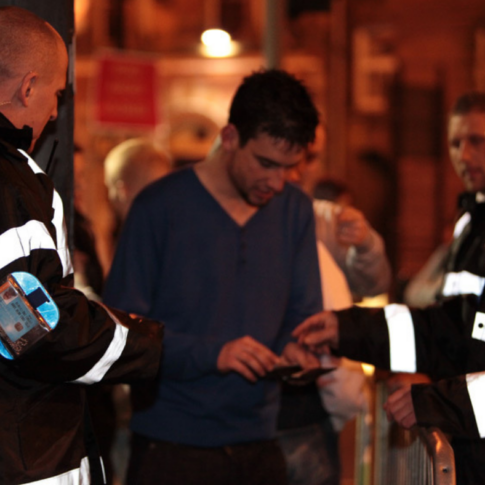
In the earth of high-stakes security, the role of a bodyguard is often seen as a silent protector, a visualise who guards their shoot up from harm while odd unseen and unfazed. The bodyguard’s primary task is to safeguard the physical well-being of those they protect. However, when the lines between tribute and queer blur, the bodyguard s role transforms from that of a inaudible scout to a field of battle in the very flesh they are meant to protect. In some extreme point cases, the bodyguard becomes the erratum and metonymic fortress a screen that faces the full wedge of the risk conscious for someone else hire bodyguards London.
The Essential Role of a Bodyguard
Bodyguards, often referred to as close protection officers(CPOs), are highly trained professionals tasked with defensive individuals usually celebrities, high-profile executives, politicians, or others at risk from potentiality threats. Their skills range from natural science battle to military science awareness, management, and even high-tech driving techniques. At the core of their grooming is the ability to foreknow and neutralize threats before they can strain their shoot, sometimes even sacrificing their own refuge to protect the somebody they are sworn to support.
A bodyguard s primary quill goal is to keep off opposition, using news, scheme, and nicety. Their protective measures may let in provision fly the coop routes, instalmen security systems, or using evasive driving. However, when a scourge escalates into aim violence or peril, a bodyguard s role shifts from the quiet down shielde to an active participant in refutation.
A Fortress in Flesh
The word”fortress in pulp” evokes a powerful project one of a human body regular firm, hard against the bombardment of external forces. In situations of extreme point terror, the guard becomes more than just a shielde; they embody the very defense mechanics that shields their node. The idea of the bodyguard becoming a fort substance they are actively positioned to take on the brunt of the physical risk to ascertain their tear s refuge.
In self-destructive scenarios, a bodyguard s presence and physical set make them the first line of refutation, often placing themselves between their client and the risk. From bullets to knives, to spineless attackers, a bodyguard s reflexes and battle preparation them to confront these threats head-on. In these moments, the guard s body becomes the screen that absorbs the full affect of the dishonor, a human barricade standing tall against chaos.
When the Battleground Becomes Personal
For many bodyguards, the act of becoming a”battleground” is a personal transmutation. The connection between guard and client often evolves over time, from a professional family relationship to a deeper bond. In the heat of combat, it is not plainly a duty to protect; it can become a struggle to safe-conduct the life of someone who has trusty the guard with their own.
Take, for example, some of the most illustrious bodyguard-related incidents. In 1995, a tribute ship’s officer onymous William O’Neal magnificently protected his shoot down, former South African president Nelson Mandela, from an character assassination attempt. In this case, O Neal’s to his duty transformed him into a bread and butter, breathing fort, willing to put his own life at risk to protect Mandela. Such instances underline that the role of a guard transcends the boundaries of mere work. It becomes an suggest, unsounded act of safeguarding a life at any cost.
When the guard becomes the battlefield, it also brings a unique feel of exposure. While a guard s preparation equips them to handle physical threats, it cannot shield them from feeling strain or psychological toll. The constant sentience of being in danger for the sake of someone else can result feeling scars, and the psychic trauma of seeing one s charge threatened can be irresistible. Yet, this is the paradox at the heart of a bodyguard s role one who must stay unemotional person and impregnable on the outside while aim an large charge inside.
The Final Act of Protection
In some tragical cases, the bodyguard may not pull through the confrontation. Their self-sacrifice becomes the final act of tribute the bodyguard s life lost in the pursuance of keeping their tear sensitive. These moments reinforce the extreme nature of the guard s role, where the boundaries between guardian and protectorate , creating a dynamic where the stakes are both the most personal and the most parlous.
In termination, a guard s role, when taken to its extreme point, becomes more than just a form of tribute. It evolves into a viscus, almost key defence transforming the bodyguard s flesh into a fortress, riveting harm meant for another. In this earth of high bet, where every second counts and every could mean life or death, the bodyguard s battleground is not just one of tactical maneuvers or strategical evasion. It is a battlefield of human resolve, a test of effectiveness, loyalty, and, at last, sacrifice.